Showing posts with label Self Love. Show all posts

March 01, 2021

Empowering Female Creators

Empowering Women Everyday in Every Way Possible

Credit: Danielle Chiel

The Artisan Nation exists to empower female creators from developing nations. Since you attended an all-girls school in your youth; as well as your mother worked as a pharmacist, what did you learn about female empowerment while growing up?

I learnt that women could do anything. I learnt that if you wanted to know something, go and find the answer.  This was role modeled by all those around me. I was constantly asked questions such as: what is it that you would like? What is stopping you? Why aren’t you doing anything about it? Who is it that you need to ask? Speaking up is in my DNA. My mother was a pioneer in her own right in so many ways.  

What realities do you believe are overlooked within developing nations pertaining to the female population? How did India result being the main focal point for your entrepreneurial endeavors?

If women in rural Indian villages don't comply with something that someone else tells them to do, especially a man, they often face detrimental physical consequences that can leave them with lifelong psychological conditions. They could be beaten or hit, screamed at, and many times this could be amplified even more if they have a father or patriarchal figure in their life who abuses substances such as alcohol, as well. With my endeavors being focused on these women, you know, when they come to work with us it can be the first time that they've ever been taught - not told - what or how to think. Doing so helps them foster and nurture their identity outside of what the forces around them growing up told them it was. They are more than just their family or their job or their upbringing. These aspects of recognizing your identity are common in people in the Western world, but these women in rural villages and developing countries don't often have that balance. So it's my mission to ensure that these women don't stay invisible, to ensure that they have a voice, and to ensure that people know about them.

How can developed nations do a better job contributing their resources and talents to nurture the mental, emotional and physical well-being of these women as valuable members of society? 

Well, the first thing we can do is acknowledge that these people are valued members of society. Their role is not just to be subservient; their role is to contribute to the betterment of the world, the same as it is your role and mine. In order for the developed world to contribute to that role, we can support businesses that employ and offer products made by women in these under served areas. We can also ensure that these ladies are offered full-time employment so that when they come to work, we know that they are compensated well enough to send their children to school and to nurture their own emotional and physical well being, which trickles down to their children and family to offer them opportunities these women may not have had in their youth. We can also offer programs where anybody from the West can meet these women and talk to them about their lives so that we can connect with them and show the world that they're real people with real value. If developed nations don't want to have hands-on emotional or physical support for these ladies, they can still offer their support through avenues like fundraising donations.

Women are educated and guided to take better care of themselves through The Artisan Nation as they become self-sufficient working professionals. This includes the engagement of dietitians, psychologists, physical movement leaders, and advisors that provide financial literacy. 

What was the biggest challenge for your team when executing this specific business plan in the field? 

The biggest challenge really was knowing where to stop. Many of these women have never been given regular work. If they've eaten a predominantly rice-based diet for all their lives, which most of them have, they can come to us malnourished. Those of us in the West know that if we're lacking in vitamin B, vitamin C, or magnesium, that has consequences on how we feel physically and mentally, and can impact our output. If you could imagine some of these ladies feeling this way all the time, they don't know that they’re missing out on a healthy and balanced lifestyle, so it was simply a brainstorming session with a group of people around our table to work out how we could most support these ladies, more than just financially. So, in order to lead a very fulfilling life, we just made a whole list of everything that humans need to flourish like love and a non-toxic support system. They need a roof over their head. They need regular meals and a balanced diet, so the biggest challenge here was actually working out how to connect the separate professionals who can provide all these needs with these women. That's why the Artisan Nation was born because, in reality, we act as a bridge to connect skilled professionals with women living in developing countries.

How do these Indian women transition from being compliant, subservient women into self-thinking respectable beings in society? Do they face any hesitation in embracing these valuable discoveries through learning about self-worth and self-love?

Most of these women absolutely face hesitation in embracing self-worth and self-love, because they were never able to embrace those values in their daily lives. They are told since childhood that whatever they say or do or think is of little value compared to what the men around them think, say, and do. Breaking that cycle of what these women perceive as “normal” is difficult and should never be done alone. That’s part of why Artisan Nation strives to connect these women with the skilled professionals who can help them unlearn their old mentality, instill newer and healthier values of self-worth and self-love, and help them understand those values are not only good to have, but they need to have them in order to live fulfilling lives and help others around them.

Presently there are two villages participating in The Artisan Nation program. What variables were used to determine which villages would initially participate in the program? How do you forecast the future participation of additional villages joining this worthy cause over the span between now and mid-2022? 

We don't discriminate between any of the villages that engage in the program. It's simply a matter of finding people in developing countries to support them. The more people in developing countries we can support, then the more villages come across our board. The only probable variable in determining which initial villages we wanted to participate with was the location because it's really hard to support one village in the north of India and one village down in the South of India with the same programs at the same time with the size we are now. We're starting by supporting all the villages within one geographical area, because that way the professionals we work with to help the women in our program, such as dietitians, can travel from one village to another close by instead of having to travel all over India.

What are some entrepreneurial challenges you faced when setting up KOCO's presence in the first 90 days in India? Were there any new challenges you embraced when implementing the mission of The Artisan Nation during the Covid pandemic? 

Implementing the Artisan Nation was a no-brainer because I knew these women needed help. Having the artisan nation as a bridge to link the skilled professionals and corporations with these women was the easy part. As far as challenges go, it's finding the right corporations and the people within them who believe that giving these women a voice is an important part of their company’s core values, but even properly communicating to corporations the many ways they can help us can be challenging. 

The biggest challenge is to actually find any size company, whether they have 10 staff, or 1000 staff to come on board and take an interest. They just need to actually contact us to find out more about what's going on, even without a commitment up-front. Getting involved is how businesses begin to impact the future, and most customers today are becoming more conscious about whether or not the people and companies they do business with care about other people, even people and communities they aren’t directly involved with. I’m sure there are millions and millions of women around the world that would resonate with our mission and support us within the blink of an eye; all we need to do is find them, to find those people who believe in our mission as being worthwhile. I believe if more people and companies have beliefs similar to ours and truly want to connect with women in these developing countries, the world would be a much more colorful, interesting, and grounded place as a result.

The Covid pandemic disfranchised about 16 million workers within the fashion industry in India. On a global level, what are a few realities about the fashion industry that are misunderstood regardless of the economic climate? 

The fashion industry has the potential to have a significant influence on women and specifically on women in developing countries.  Most of these women are highly skilled and earn their living using their hands.  Artisan products are highly valued and these women have a very strong drive to send their children to school (an opportunity that they themselves didn’t have). I have a very strong background in connecting with others, especially women from developing countries and areas, and helping them to achieve their goals. I believe that, if the fashion industry got behind women from under served and developing areas having a voice and helping them to achieve their goals, even something as simple as a woman being able to send her children to a safe school in order to obtain a proper education, the fashion industry would have the potential to change the world enormously.

The fashion industry, regardless of economics, still has a lot of catching up to do as far as sustainability and human rights. It’s doing better than it was even 5 or 10 years ago, but improvements can still be made for the good of the industry, employees, and customers. I wouldn’t say the barriers to entry for entrepreneurs in India or anywhere else are necessarily high, but climbing over or breaking through those barriers still takes a lot of work, especially for women entrepreneurs in traditionally patriarchal communities. It’s not something anyone should take lightly, but they can be overcome through dedication and passion towards a mission greater than yourself..

Danielle, you uplift and inspire women around the world, who are the women whose wisdom has contributed to your strength?

The women that I work with are my greatest role model. They are resilient, highly intelligent and it is an equal two-way exchange of skills.  

Working in the field and partnering with different personalities demands time and energy. How do you nurture your self-care and emotional growth when not actively working on KOCO and The Artisan Nation?

Besides supporting the women that I work with I swim and make artisan chocolates.  Both enable me to totally switch off.  I also have 2 grown sons that I love to cook for. 

What is the best entrepreneurial advice you've received from another female entrepreneur? 

It’s from Emma Isaacs who runs a large women’s networking group here in Australia. It was, “always say yes and work out how later”.  If my memory serves me correctly, she got this from Richard Branson.

When in doubt, who or what do you turn to that allows you to melt these doubts away?

I have always had mentors around me, so I either turn to my sons, my mentor or the swimming pool. 

You're also an author. Danielle, do you have any favorite books that you enjoy reading? 

The most recent book I read was Powered by Change by Jonathan McDonald.  It has a subtitle of, How to design your business for perpetual success.  I’d highly recommend it. It’s a fantastic basis for thinking and structure.

If you were to reincarnate and return to earth a 100 years later, what changes would you like to see in society?

That all women are empowered and independent and the relationship between people are of mutual respect. 

Please share with audiences how they can support your work.

Learn how the inception of KOCO & The Artisan Nation is driving positive change in India through empowerment of women.

October 05, 2020

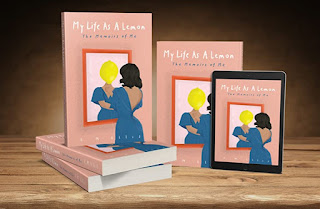
Meet FM Ellis, Author of My Life as a Lemon

Credit: FM Ellis

Faye, the audiences are excited to learn about you. Can you please share what was the turning point that inspired you to start writing "My Life as a Lemon" back in 2011? The book is a culmination of several years worth of writing stemming from a few year-long breaks. How did these mini writing breaks refine your approach to penning your story?

Thank you for having me. I am excited and privileged to be able to speak with you and your audience in hopes to spread my message and intentions. I do not recall one specific point that inspired me to start writing, but for years prior to 2011, I had entertained friends and co-workers with my crazy stories. At one point, I stopped sharing all the juicy details of my weekend or encounters and started saying, “read the book” and the idea just stuck. The breaks in writing, sometimes years at a time, allow me to mature and get out of my story so that I could write it. It was like a pregnancy, my story had to develop through proper nurturing for it to be born. Through that process, I became the woman I am today. The mother of this beautiful, twisted story that I can share with empathy, love, and confidence. Ensuring that the intended message is conveyed. Had I rushed it, countless lessons would have been overlooked and my purpose thwarted. 

"My Life as a Lemon" is your first book as an author. Writing an autobiography demands the author to relive events from a reservoir of memories and shelved emotions. Our bodies even host cellular memory of our life events. What was the easiest part of penning an autobiography? What was the most challenging part of the writing process when sifting through these personal experiences and deciding what to share with audiences? 

Surprisingly, the easiest part was recounting events. The who, what, when, where, why and how. The challenge was reliving those moments. Being as authentic and naked in my descriptions as possible. There were stories I had to sit on for years because the mere thought took everything out of me. There were plenty of nights I wrote through tears, self-reflection, and doubt. It was the final stages of delivery, and it was the hardest. 

Your autobiography highlights a loving childhood in a close-knit family while exhibiting a balanced religious and cultural home. Your father was an advocate of Elijah Muhammad and Louis Farrakhan while your mom devoted her life integrating the presence of Jesus in the home. Did you ever encounter moments where you felt the need to accommodate one parent's interests over the other? How were you able to coexist alongside such diversified ideologies under the same roof? 

I cannot speak for my brothers, but I never felt the need to sort of juggle my parents’ interest to please one over the other. What I did do was show interest in those things each parent presented. For a child, this is just another way to bond with your parents. Additionally, demonstrating interest in what someone else liked was modeled by my parents themselves. They did a wonderful job of tending to the things my brothers and myself showed interest in, so it was a natural reciprocation. As far as the Honorable Elijah Muhammad and Jesus Christ coexisting under one roof, both taught of loving oneself and living an exemplary life. The world may see the teachings as conflicts, Islam picked up where Christianity may have stopped. Both teachings were essential for our household. As black people trying to navigate through a system not necessarily designed to propel people that look like us. 

Most successful family units pride themselves in building a strong circle of trust and healthy boundaries. In "My Life as a Lemon" various layers of trust are explored as secrets begin to unfold over time. You were raised in an environment that nurtured a strong pillar of strength, empowerment, and faith. How did you define trust as a child? How did your perception of trust evolve as a teenager? How do you define trust today as a mature woman? 

As a child I define trust as love and protection, as demonstrated by my parents, grandparents, uncles, aunts. Trust was being able to depend on someone to take care of me. That definition has not changed, the reason I lost trust and struggled in some relationships was because I stopped feeling cared for. What rose in the place of trust was anger and disappointment. That belief still holds true for me today. 

Given your past life experiences (some which include patterns of blacking out from drinking and questioning your self-worth), at what point in time did you finally start trusting your judgement again? In today's age, people are often looking outward for validation and life direction. As a mother of two daughters, what have you taught your daughters about trusting their own judgement?

I began to trust my own judgement when I started seeing the fruits of my labor pay off. It took years, but the discipline, hard work and sacrifice worked. I still enjoyed a social life but revisiting my list of “things to do”, setting deadlines and seeing things to completion had become my new norm. It is because of these disciplines I knew I could trust myself to be and do whatever I wanted. That is a feeling everyone should experience. Unfortunately, far too often, those feelings are centered around negative outcomes. But a simple shift in perception and habits will transform that expectation and ultimately your life. 
As a mother, I attempted to be as transparent as needed with my daughters. They witness me win and lose, free and incarcerated, inspired and lost. Through it all my results came with an explanation and from that point they were free to make their own choices, fully aware that each comes with consequences or benefits. I also spoke openly about my financial and legal troubles. As young adults they have been more level -headed, giving and self-assured than I ever was at their ages. It seems that something worked. 

Secrets, like promises, are dangerous if not kept. "My Life as a Lemon" discloses secrets which challenge you to cope as these skeletons come to life interfering with your life journey. In your opinion, are there any secrets that should never see the light of day? Under what circumstances should secrets be disclosed (even at the expense of breaking trust) to offset any dire repercussions down the road? 

The definition of the secret is something that is kept or meant to be kept unknown or unseen by others. That being said, what is done in the dark will soon find light. We should ask ourselves, if the repercussions of the secret will be worse through voluntary disclosure or by other means. Yes, there are times when we need to mind or own business and refrain from telling secrets that have nothing to do with us, secrets that have no benefits if disclosed, and vengeful secrets(disclosure with the intent to hurt).

On the flip side, innately we all know what should and should not share. Those secrets that are eating at us and holding us in bondage are the ones that should be addressed. It is like ripping a bandage off a sore, it’s ugly underneath and still hurt, but the exposure can accelerate the healing process. 

Faye, the elements of trusts and secrets also touch upon human boundaries in a literal and metaphorical sense. How do you define and manage healthy boundaries in your life today? How do you know when you are not being true to yourself?

Today I define healthy relationships as the ones that make me feel healthy. Those relationships that enable me to be the change I want to see in the world. For even in my darkest days, I knew that relationships can only do one thing…fill you up or deplete you. I know I am not being true to myself when I feel depleted, rather that is through my own actions or someone else’s. Nowadays, I am comfortable with stating my desires and addressing the issues. I trust results.

Discovering and applying our inner voice is a lifelong process. Speaking up isn't always easy nor is it always welcomed in society. Can you recall a time when you tapped into that voice and exercised courage to speak up for a cause important to you? 

Recently, I started FM Friday on Facebook to speak about my childhood experience with abuse and how to educate and empower our children and ourselves against the pandemic of sexual abuse. RAINN which stands for Rape, Abuse, Incest national network reports that in America (someone, not just women) is a victim of a sexual crime every 73 secs. If that is not a pandemic in need of a cure, then I do not know what is. I am using this platform to give the experts, like my local police department’s sexual victim unit, and other national organizations to speak with my audience and arm them with the correct utility to win this war. I have found my purpose. 

When it comes to self-development, is there any specific aspect of life where you've significantly grown? How did this shift evolve over time? Were there any activities or resources that helped you manifest the "FM Ellis" today?

Today, I trust my decision-making because I know what it is that I want. At any given moment, I can assess to see if my actions and activities are contributing to my big picture or taking from it. The realization of not having a defined purpose, which allowed everything to be of interest and ultimately a distraction. To finally, accept that I could not figure everything out myself. Going to therapy was the commencement of the shift. At that point, I began to hold myself accountable for my day-to-day activities, which eventually led to better results than I previously produced. In addition to therapy, I started a morning ritual of waking up earlier, listening to an online sermon, going to the gym, and using my commute to work to listen to motivational audios and books. Over time these habits changed my approach to everything. 

As a self-published author, can you please share two tips that can benefit new writers seeking direction for presenting their work online and offline.

Although I am still navigating my way through this literary maze, I would strongly suggest growing a following via social media, reaching out to other authors for insight and advice and stay in the public’s eye. Podcast, article, radio interviews, YouTube, collaborations with other up and coming artists/authors. Talk to anyone that will listen, participate, volunteer, just a grassroots effort daily. Eat, breath and live your book. 

Faye, you're a proud St. Louis native spreading joy in Georgia now. What are two things that you miss about St. Louis? What are two things about Georgia that you've grown to love over time?

The authenticity or realness of the people, Midwesterners are pretty much “what you see is what you get”. Also, the sense of community. Regardless of the years that have passed since I was a resident of St. Louis, there is always welcoming warmth I can depend on when I go back. 

As far as Georgia is concerned, it is a staple of progress and has made an impact in one way or another on the world. It is a great place to be associated with. The talent, education, innovation, and influencers that come from this state is unbelievable. Secondly, The landscape both business and literally is something to behold.

If today were your last day, how would you invest your remaining hours on earth?

I would spend it with my family, ensuring they could pick up where I left off in fulfilling the goal of eradicating sexual abuse through education, empowerment and a legal system that believes in a victim innocence without victimizing them again. 

Your life story encapsulates several genres in "My Life as a Lemon". If you had to pair a song to reflect the book's essence, what song would it be and why?

It’s in the opening credits of my FM Friday Facebook live show (I do not own the right to this song) Mary J. Blige’s Know. When I heard it for the first time, I pulled over on the side of the road because of the transparency and truth this song speaks. 
“Oh, Lord, Lord, Lord
They just don't know, know, know
How hard I had to go, go, go
To get through, to get through
They just don't know, know, know, know
Know, know, know
How many times I lost (how many times I lost)
Just so I could win (ooh, yeah)
They just don't know, know, know, know
Oh no, no
How many times I've died (how many times I've died)
Just to live again, oh yeah”

Please share with audiences how they can support your work.

Subscribe at Fmellis.com and follow me at lifeasalemon on Instagram. Best of life to you all!!


Credit: My Life as a Lemon, Author FM Ellis


July 28, 2020

Meet Lady Kathryn, Life Coach & Spiritual Counselor

Credit: Lady Kathryn
Hello Lady Kathryn! Please introduce yourself and share your occupation.
I am a Psychic Healer, Life Coach, Akashic Records Reader.

You're recognized as a world renowned life coach and spiritual counselor. How did you come to learn of your higher calling?
In a nutshell, living life, being born different in being able to see the other side. Life experience has been my greatest teacher.

What is the most rewarding part of your occupation? 
The most rewarding part is seeing the transformation of clients, who are able to put in the work to bring transformation to their lives and learn the lesson of Self Love. The most challenging is teaching others to not give his or her power away and to take control of their own lives, along with teaching them to love themselves. 

What is the most misunderstood thing about yourself? And of your occupation?

The most misunderstood thing about me is “My self love” is not selfish. I find that many assume that because of who I am, I am not allowed to have boundaries, times of sleep, times of rest or even alone time. In terms of occupation, all predictions are based on a client’s decision. I am not responsible for the free will of my clients. A lot of clients when they first start working with me, cannot see that every single decision made in his or her life creates his or her own future. 

You also happen to be an author of articles and books. What inspired you to write about twin flames? 

I am an old soul. Before learning to read the Akashic Records, I had 3 karmic soulmates and with each one, I truly believed they were twin flames. It was not until I learned to read the records, did I understand that in a psychic reading, we cannot see twin flame cords. We see soulmate cords and all karmics feel identical to the Twin. Upon reading the records, I was able to see and hear twins from the high beings and understand the vast differences. There is so much misinformation on the net and many false twins out there. I would not suggest asking a psychic if this is a twin. Go straight to the Akashic Records for that answer. I now work with karmic soulmates and twin flames. The classes that I teach along with the work in the records are literally transformative to my clients and to myself. 

When you're in need of life guidance, what steps do you take to seek direction? 

Today, as my spiritual tools, I will ask God for help, seek answers in the Akashic Records, take all advice from the high beings, spirits & angels that are there to provide ALL answers and insight. I live the Akashic Records truth. 

Not seeking the answers in the Akashic Records, is like walking through a dark room at night without turning on the light and then fussing at the furniture because I walked into it. 

How has working as a counselor serving strangers made you a better partner to your beloved? A better parent to your children? 

I have worked in several “areas as a therapist” and have seen and heard so many lost souls tell their stories and literally change their lives. I am not sure how working as a therapist made me a better partner/parent but I do know this, it has made me grateful. 

Working with others, opened my eyes to “my yet’s” this has not happened to me yet. I understand that each of us is capable of facing so many issues based on today’s decisions and with that said “I try daily to choose to do the next right thing”. In choosing patience and tolerance over impatience or anger, I find that my children and my beloved respond to positive actions in a loving way. 

What is the best and worst advice you've received on running a successful business practice?

The best advice is to set boundaries, get 8 hours of sleep, eat 3 meals a day so that I can be there and be present for 8 hours a day for clients. The worst? The absolute worst was to give all of me to my business and leave no time for self, family, fun. 

As an honest and compassionate counselor, how would you define tough love? Who's exercised tough love with you?

Tough love is speaking your truth in love and compassion, without any judgments of self or others. There was a time in my life where I was attracting people who were not nice and this was because I had a low opinion of me. I was actually inviting others to dismiss me. Today, I attract people who are full of self love and that means tough love. They speak truth to me with compassion and love. 

You've provided services at top venues including Disney World in the United States. Are there any global landmarks from where you'd love to do a live show?

It has been a few years since I worked at Disney. I presently teach psychic development and Akashic Records, on zoom with great success. I would absolutely love to have face to face clients again or even teach a seminar live. In terms of where? I am open to Spirit and what Spirit has to say about it. 

Please share how interested members can contact you and support your work. 

Website : https://loveandlightwins.com
I can be contacted at ladykathryn@(domain).

Featured Post

Writers Series - Recapture the Moments!

  Credit: Writers Series, By Sasha Talks Capture the Latest Episodes ... 🎤 Meet Helen Glanville: Author, "A Second Chance: A Disgraced...

Quote of the Month

Quote of the Month

Popular Posts